Practical guides
How to Build a Family Memory Archive When Someone You Love Has Dementia
A practical guide for families gathering photos, stories, and memories to share with a relative living with dementia. What to collect, how to organise it, and what actually helps.
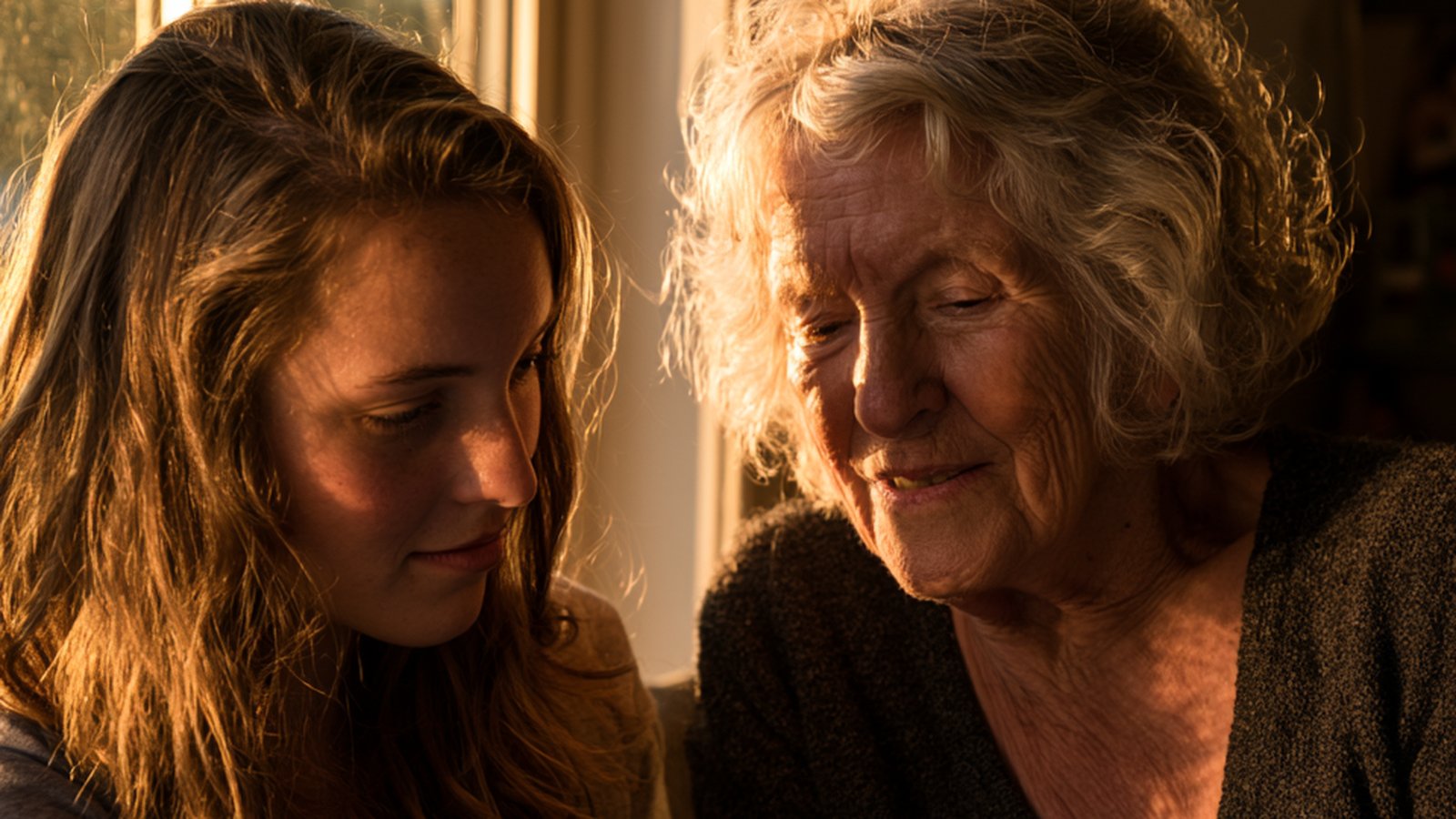
When someone in the family is diagnosed with dementia, one of the quiet heartbreaks is realising how much of their life story has never been written down. The stories about the house your grandmother grew up in, the holidays your father planned in obsessive detail, the way your uncle met his wife at a dance in Bolton — those stories live in the people who remember them, and dementia is gradually unpicking the very thread they're stored on.
A family memory archive is simply a deliberate attempt to gather those stories, photos, and records of a life in one place, so they're not lost and so they can be shared. It's not a therapy. It's not a cure. But it is one of the most meaningful things a family can do together when someone they love is slipping.
This article is a practical guide to how to do it well.
Start with the person, not the material
Before you start scanning photographs, think about who the archive is for. Is it for your mother, so she has something to look at and share with visitors? Is it for the grandchildren, who might not otherwise know her history? Is it for the whole family, as a living record? Often it is for all three, but the emphasis matters.
If it's primarily for the person with dementia, the archive needs to be accessible, warm, and curated to moments that still bring them joy. Too much material overwhelms. Photographs of people they can no longer place will distress, not delight. A gentle, well-edited selection of things they clearly love is worth more than a comprehensive shoebox of everything ever taken.
If it's primarily for the wider family, more is more. Include the business letters, the school reports, the odd bit of gossip scrawled on the back of a postcard. Context matters. Future grandchildren will want to know who the serious woman in the hat is, and "Auntie Marjorie, 1953, Blackpool with the engineering society" tells them something "Auntie Marjorie" alone does not.
Most families want both. Do both, but don't mix them up: a curated viewing archive for the person at the centre, and a fuller reference archive for the family record. They can share the same source material but they serve different purposes.
What to gather
Photographs are the obvious starting point, but a full family memory archive is richer than that. Consider, in rough order of ease:
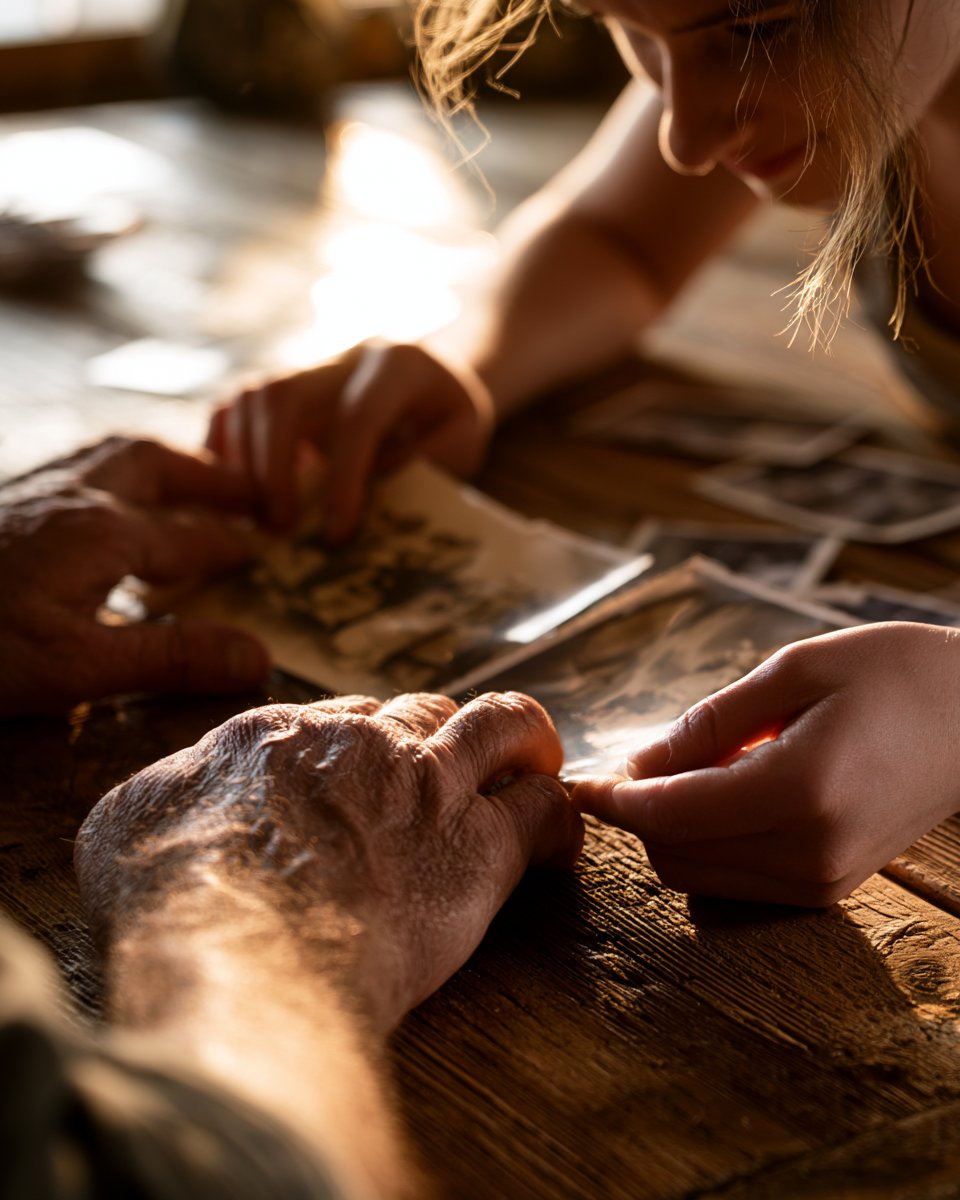
- Photographs, digitised where they're physical. The earliest photos often matter most; childhood, wedding day, first house, first child.
- Letters and cards. Love letters, postcards from holidays, letters home from school or from National Service. These carry the voice of the person in ways photographs cannot.
- Objects and their stories. You cannot archive a grandfather clock or a christening gown, but you can photograph it and write down what it meant. The story is the part that matters.
- Audio recordings. If your relative can still tell stories, record them. A phone voice memo is enough. Ten minutes of a grandmother recounting how she met her husband is worth more than a thousand photographs.
- Maps, floor plans, sketches of places. Where they lived, where they worked, the route to school. Geographic memory is surprisingly durable and often emotionally rich.
- Music they loved. A playlist is a legitimate part of a memory archive. Music connects to autobiographical memory in ways almost nothing else does.
- Handwriting samples. The way someone writes is as distinctive as the way they speak. A letter, a recipe card, a shopping list in their handwriting is a small artefact that becomes treasured.
- Family trees and relationships. Who married whom, who was whose aunt, what happened to the cousin nobody talks about. This is where the family gossip becomes family history.
You will not gather all of this at once. You don't need to. Start with the photographs and one recorded conversation, and let the archive grow from there.
How to organise it
The two common failure modes are opposite: too messy, so nothing can be found; or too rigid, so adding to it becomes a chore that nobody does.
The middle path is to organise by life stage rather than by strict chronology or strict topic. Childhood, school years, young adulthood, working life, family life, retirement, later years. Within each, a rough chronological order is enough. Don't get precious about exact dates; "around 1967, the Cornwall holiday" is fine if that's all you know.
Name the people in each photograph. This is the single most useful thing you can do, and the thing most families never get round to. The person at the centre of the archive may be the only one who knows who everyone is. Capturing that knowledge before it's gone matters more than almost anything else.
Write a short caption for each photograph, even one line. "Auntie Marjorie and Dad, Blackpool 1953. They cycled there and back on the tandem." A photograph with a caption is a story. Without one, it's just pixels.
The sensitive side
Not every memory is happy, and not every memory should be surfaced. Consider before you include:
- Photographs of people who have died recently or who feature in painful history. An elderly person with dementia may not remember that their sibling died thirty years ago, and being reminded can produce genuine grief each time as if it were fresh. A photograph can trigger that. The kindest thing is sometimes to omit.
- Difficult family history. Divorces, estrangements, family secrets. The archive is not a truth commission. You can acknowledge that life was complicated without making the archive a vehicle for settling old scores. Other family members with different memories of the same events deserve respect too.
- Photographs of the person themselves as they were. Some people with dementia respond warmly to old pictures of themselves. Others find them disorienting ("who is that?" of a photograph of themselves at thirty). It varies. Test gently.
- Third-party privacy. If the archive includes photographs or stories involving people outside the family — friends, neighbours, former colleagues — think about whether those people would want to be included. Most will be flattered; some won't.
The archive's job is to serve the person at the centre and the family around them. It is not a moral obligation to include everything.
How to share it
Once you've gathered the material, the question is what to do with it.
The simplest answer, and often the best, is to print it. A well-made photo album with captions is a profound thing. Your relative can hold it, turn pages, show it to visitors. It does not require them to understand a device. It does not crash. It does not need charging. For many families with a parent or grandparent with moderate dementia, a physical book is the single most useful output of the archive.
Beyond that, digital options exist. A shared photo album on a family platform (iCloud, Google Photos, Dropbox) is accessible to the wider family and can be added to over time. Dedicated family memory platforms — Memrease is one, StoryCorps-style audio platforms are others, life-story apps like Brainlike and StoryWorth also live in this space — offer more structure and varying degrees of support for organising by life stage, sharing with specific family members, or delivering memories back in a paced way. Which one fits depends on what you're actually trying to do. If you want a rich, organised family archive that everyone can contribute to and that a relative can engage with regularly, a dedicated platform probably helps. If you want a single shareable album, the free tools are fine.
Whatever you choose, the technology is less important than the content. An archive of two hundred well-captioned photographs in a cheap photo book beats a sophisticated digital platform with nothing in it.
A note on doing this with the person at the centre
If your relative is able, do some of the gathering with them. Ask them to identify people in photographs. Record them telling the story of how they met their spouse. Let them choose which photographs go in the front of the album. Being the curator of one's own life is dignifying in a way that being curated is not. Dementia does not take that away at once; it takes it away gradually, and the earlier you start, the more the person themselves can contribute.
If they can no longer actively curate, you can still share with them. Sit together, turn pages, let them respond however they respond. Even if they cannot name every face, they may smile at one. That's enough.
What matters most
The archive is not the point. The archive is the material. The point is the relationship — the time spent gathering, the time spent sharing, the conversations the archive makes possible.
A family that never builds a formal archive but sits with their relative and tells the old stories is doing the real work. A family that builds a beautiful archive but never visits is missing the thing the archive is for.
Do what you can, with what you have, with the person you love, while you still can. That is the whole of it.